

Summary
With the advancement of technology, the way we build professional connections has
changed. Platforms like LinkedIn create new opportunities, which is not only for
job hunting, but also for collaboration and long-term growth.
This article is the first part of a series of articles that share my structured
approach to developing a LinkedIn presence, from crafting a strong profile, to
building meaningful signals, to patiently waiting for the right opportunity.
Before any conversation happens, our profile page has already spoken for us and
crafted a first impression.
Identity & the hook
 #
#Name
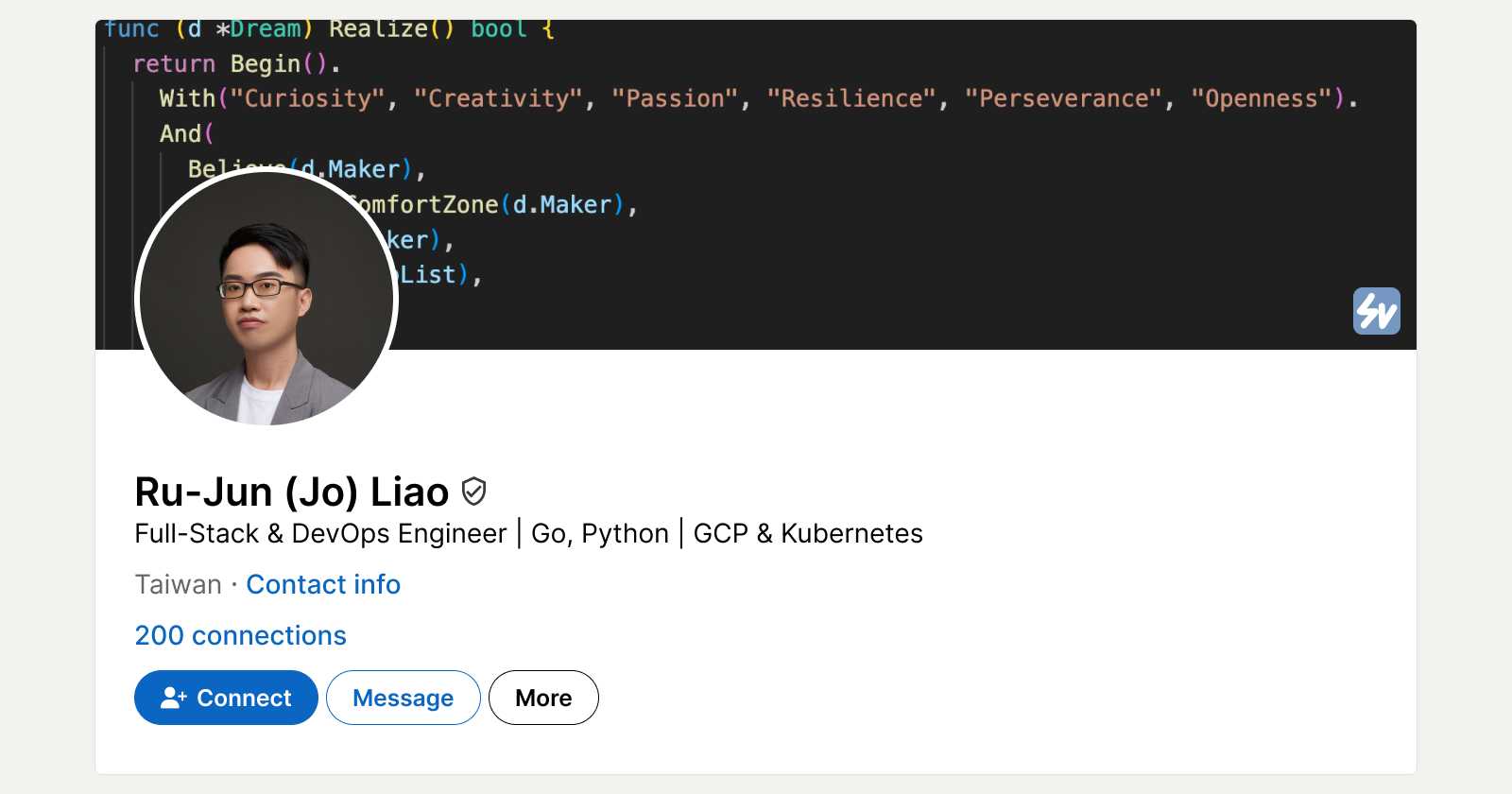
I use my full Chinese name on Linkedin because of the LinkedIn verification,
which requires the name to match the one on our passport.
However, some of my friends whose names are harder to recognize or remember
internationally prefer to use their English name instead. In their case,
clarity and memorability are more important than verification.
Ultimately, the choices depend on our goal, whether we prioritize official
verification or global readability.
Headline
This is the first professional signal people see. It should clearly communicate
our positioning.
When writing my headline, I follow three principles:
- Combine generic and specific terms
Don't just say "Software Engineer." Be specific about the stack. - Define how we want to be perceived
Are you a specialist, a lead, or a builder? - Include industry-specific keywords
Use the terms recruiters and collaborators actually search for.
Visual branding
 #
#Avatar
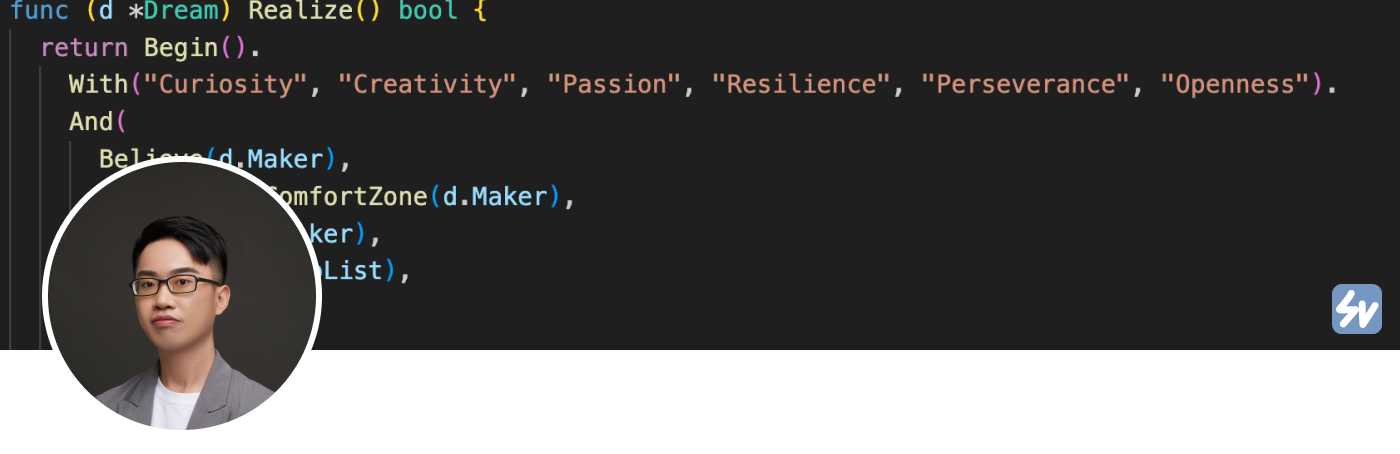
The most important factor is our face, which should be the main focus. It doesn't need to be taken by a professional photographer, but it should be clear, official, and have a simple background. Moreover, don't forget our smile. It is the quickest way to establish a friendly connection.
#Cover Image
This is the biggest visibility signal on our profile. It is a good way to express our personality, our brand, and even our roles. We should avoid the default LinkedIn background; otherwise, it doesn't show we are active and intentional about our presence.
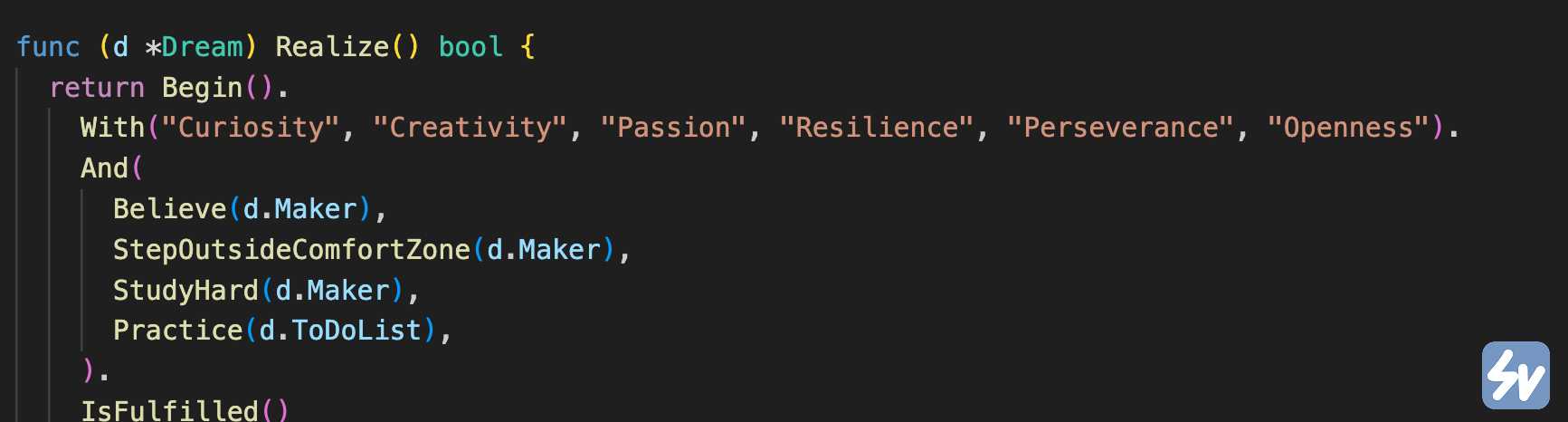
I use my cover image to show my role as a programmer. It reflects my belief that high-quality code can tell a story on its own through readability. It acts as a visual reinforcement of the craftsmanship we bring to our work.
#The narrative
#About
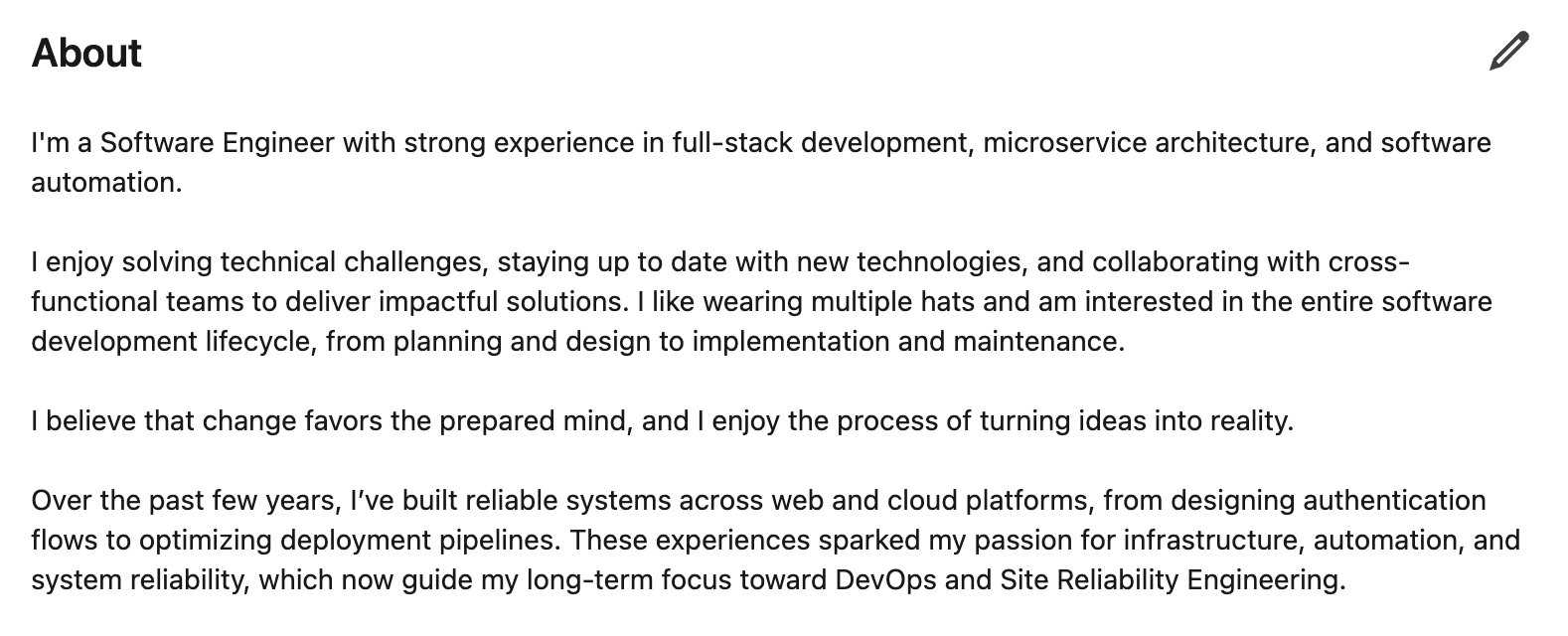
This section is a summary of our professional story. It should be written in a
way that is easy to read, understand, and even scan.
Because it is positioned near the top of our profile, readers who have been interested
in our story usually decide whether to read the rest based on this section. Therefore,
I prefer to write the simplest version of my story, as if I only have 30 seconds
to introduce myself.
In addition, this is almost the only section that we can fully control the content.
I like to use it to express my personality and my values, giving people a glimpse
of who we are beyond our technical skills.
Experience
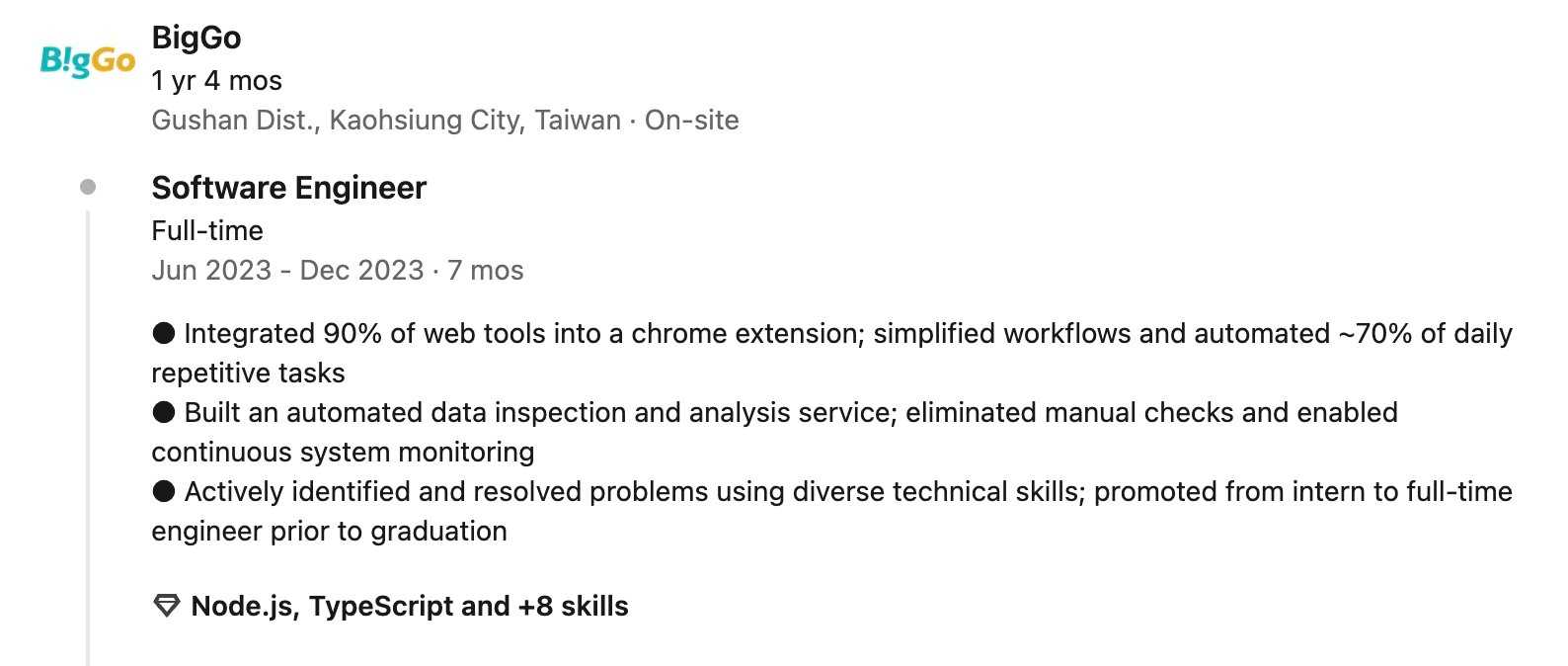
To let people understand our professional story, we should avoid just filling in the company name and job title. Instead, I recommend using at least three bullet points with this format:
- [Action]; [Impact]markdown
It is a good strategy to use figures to show the impact, such as the
performance improvement or the revenue growth. Numbers are easy to recognize in
a block of text and make our results more intuitive. For consistency, we follow
APA style: writing out numbers zero through nine and using numerals for 10 and
up.
By the way, I also add critical skills to my experience section. It is a good
way to show our expertise and let people know what we are good at.
Recommendation
This section is a great opportunity to show our credibility and expertise. It is not only a way to highlight our past achievements but also a way to show our potential for future contributions. When we ask for recommendations, it is helpful to provide a structure for the people writing it. I usually suggest they follow a format like this:
- The context
How did we meet and work together? - The experience
What was I responsible for and how did it feel to work with me? - The endorsement
A short recommendation at the end
This approach makes it much easier for our colleagues to write something meaningful that truly supports our professional story.
#Next steps
By following this structured approach, we have ensured that our profile is no longer
just a digital resume. It is now a high-trust platform that speaks for us.
However, even the best foundation is quiet without a signal. Having a good profile
is like having a well-designed store in a quiet alley. We still need to invite people
in. In the next article, we will move from setup to action and discuss how to
generate meaningful signals on LinkedIn.
What is your strategy for writing a profile?
How did you decide on your headline?
I’d love to hear your thoughts. Feel free to join the discussion on
this LinkedIn post.